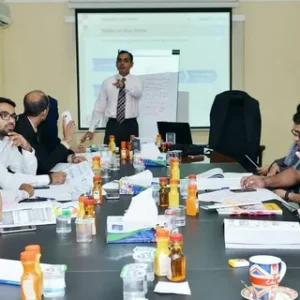



Strategic Accounting Policies and Procedures: Frameworks for Governance and Excellence
Course Overview
In today’s fast-paced financial environment, organizations must ensure consistency, compliance, and transparency across all accounting functions. This program is designed to equip professionals with the skills and tools required to design, implement, and maintain a robust framework of accounting policies and procedures. Participants will learn how to build an integrated accounting manual, align departmental functions, and establish governance structures that enhance accuracy, accountability, and operational excellence.
Program Objectives
By the end of this program, participants will be able to:
* Design and produce a comprehensive Accounting and Finance Manual.
* Plan the human, technical, and financial resources required for efficient departmental performance.
* Establish clear authorities, roles, and responsibilities to maximize efficiency and accountability.
* Implement segregation of duties and effective internal control mechanisms.
* Develop standardized accounting policies and procedures that streamline daily operations.
* Apply essential accounting assumptions and principles consistently across all activities.
* Clearly define **“who does what”** and **“how it’s done”** by designing standard and reliable accounting processes.
5-Day Professional Development Program
Day 1: Building the Foundation – Accounting Governance and Departmental Design
**Key Focus:** Establishing a strong governance and structural foundation for the accounting function.
**Topics Covered:**
* Purpose, importance, and structure of the Accounting & Finance Manual
* Authorities, duties, and responsibility mapping in accounting operations
* Designing departmental workflow for accountability and efficiency
* Planning resources: balancing people, systems, and automation (HRVSS framework)
* Effective communication between accounting, finance, and management functions
**Key Outcome:**
Participants will develop an outline for their organization’s accounting manual and identify areas requiring stronger control and documentation.
Day 2: Accounting Principles and Application Framework
**Key Focus:** Understanding and applying essential accounting concepts to ensure compliance and reliability.
**Topics Covered:**
* Fundamental accounting assumptions and their practical implications
* Accrual vs. cash basis of accounting and when to apply each
* Going Concern, Consistency, and Reliability principles
* Recognition and measurement of assets, liabilities, income, and expenses
* Linking accounting principles to organizational financial reporting
**Key Outcome:**
Participants will be able to interpret, apply, and document accounting concepts in line with organizational and regulatory standards.
Day 3: Policies and Procedures for Core Accounting Cycles
**Key Focus:** Developing structured policies and controls for daily accounting operations.
**Topics Covered:**
* Designing and managing the Chart of Accounts and cost centers
* Exchange rate management and foreign transaction handling
* Prepaid and accrual concepts and treatments
* Accounts Payable cycle: vendor management, invoice processing, and payment control
* Accounts Receivable cycle: customer approval, invoicing, and collection management
* Payroll recording, employee benefits, and statutory deductions
**Key Outcome:**
Participants will design standardized workflows and internal control checklists for the organization’s core accounting cycles.
Day 4: Managing Fixed Assets, Inventory, and Production
**Key Focus:** Establishing robust procedures for tangible assets, costing, and inventory control.
**Topics Covered:**
* Fixed asset capitalization criteria and policies
* Depreciation methods, schedules, and recording
* Disposal and reporting of assets
* Recording and analyzing production costs
* Material transfers and inventory valuation
* Issuance and reporting of finished goods
**Key Outcome:**
Participants will develop clear fixed asset and inventory management policies ensuring accurate cost tracking and reporting integrity.
Day 5: Reporting, Budgeting, and Continuous Improvement
**Key Focus:** Integrating policies into reporting, analysis, and continuous financial improvement.
**Topics Covered:**
* Developing comprehensive budgeting and forecasting policies
* Linking operational data with financial statements
* Preparing and issuing internal and external financial reports
* Conducting financial analysis and variance evaluation
* Embedding continuous improvement and compliance monitoring
* Reviewing and finalizing the Accounting & Finance Manual
Program Delivery Methods
* Interactive lectures and case discussions
* Practical exercises and policy-writing workshops
* Real-world examples and benchmarking
* Group presentations and peer review
Target Audience
This program is designed for:
* Finance Managers and Controllers
* Accounting Supervisors and Team Leaders
* Internal Auditors and Compliance Officers
* Financial Analysts and Policy Developers
* Professionals responsible for financial reporting and governance
Methodology
The course combines **interactive lectures, real-world case studies, group discussions, and policy design workshops**. Participants will draft sample accounting policies, design reporting templates, and evaluate governance frameworks to ensure practical application and institutional improvement.
Enquiries and Registration
Enquiry at : admin@keleaders.com
Whatsapp: 0044 790 125 9494
For more details visit our website : www.keleaders.com