

Transform Procurement into a Strategic Business Advantage with Artificial Intelligence
Artificial Intelligence (AI) is reshaping the future of procurement, tender management, supplier evaluation, and commercial negotiations. Organizations across Saudi Arabia and the Gulf region are embracing AI-enabled procurement to reduce costs, strengthen governance, improve supplier performance, and accelerate decision-making.
Whether you’re leading procurement for a government entity, a multinational enterprise, or a rapidly growing private organization, adopting AI-driven procurement practices is no longer optional—it’s becoming a competitive advantage.
This comprehensive guide explores how AI is transforming procurement, how executive teams can modernize tendering processes, and how strategic negotiation skills create measurable business value.
Executive Summary
Procurement has evolved far beyond purchasing goods and services. Modern procurement teams are expected to deliver strategic value by:
- Reducing procurement costs
- Managing supplier risk
- Improving contract performance
- Increasing transparency
- Supporting digital transformation
- Enabling data-driven decisions
- Strengthening compliance
- Enhancing organizational resilience
AI enables procurement professionals to analyze large volumes of supplier data, automate repetitive tasks, improve forecasting, identify procurement risks, and support more informed commercial negotiations.
Organizations investing in AI-powered procurement often see improvements in efficiency, decision quality, and supplier collaboration while freeing procurement teams to focus on strategic initiatives.
Why This Guide Matters
Traditional procurement methods struggle with challenges such as:
- Manual tender evaluations
- Long procurement cycles
- Limited spend visibility
- Poor supplier performance measurement
- Human bias in evaluations
- Contract management complexity
- Increasing regulatory requirements
- Rising procurement costs
- Limited predictive insights
- Inefficient negotiations
Artificial Intelligence addresses many of these challenges by combining automation, analytics, and decision support to help procurement teams work more effectively.
AI is Transforming Every Stage of Procurement
Modern AI technologies support procurement teams throughout the procurement lifecycle.
They can assist organizations in:
Procurement Planning
- Spend forecasting
- Budget analysis
- Demand prediction
- Category planning
Supplier Discovery
- Supplier intelligence
- Market research
- Risk profiling
- Supplier comparison
Tender Creation
- AI-assisted documentation
- Requirement generation
- Scope validation
- Compliance checks
Bid Evaluation
- Automated scoring
- Technical comparison
- Commercial evaluation
- Risk identification
Negotiation
- Pricing analysis
- Scenario modeling
- Negotiation preparation
- Commercial strategy
إدارة العقود
- Clause analysis
- Compliance monitoring
- Renewal alerts
- Risk detection
Supplier Performance
- KPI monitoring
- ESG tracking
- Performance dashboards
- Continuous improvement
Why Saudi Arabia is Accelerating AI Procurement
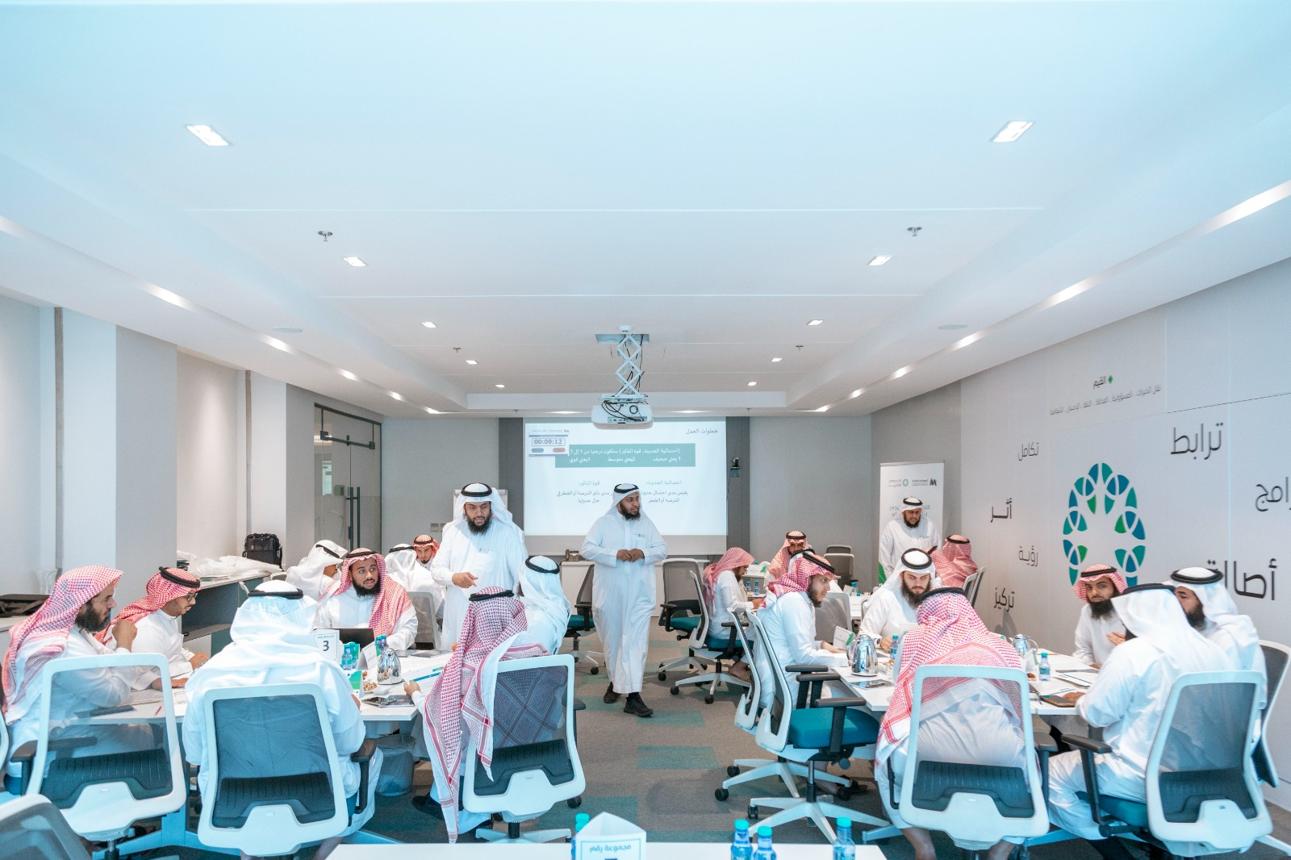
Saudi Arabia is investing heavily in digital transformation across both public and private sectors. As organizations modernize procurement and operational processes, AI is becoming an important enabler of more efficient decision-making, stronger governance, and improved supplier collaboration.
Many organizations are exploring AI to support:
- تخطيط المشتريات
- Supplier intelligence
- Risk management
- Spend analysis
- إدارة دورة حياة العقود
- Data-driven reporting
- Process automation
These capabilities can contribute to improved efficiency and support broader organizational transformation initiatives.
Who Should Read This Guide?
This guide is designed for:
القيادة التنفيذية
- الرؤساء التنفيذيون
- COOs
- CFOs
- Chief Procurement Officers
محترفو المشتريات
- Procurement Directors
- مديرو المشتريات
- Strategic Sourcing Managers
- Category Managers
- مديرو العطاءات
- مديرو الشؤون التجارية
Contract Management Teams
- مديرو العقود
- مسؤولو إدارة العقود
- المتخصصون في المجال القانوني
- Compliance Officers
Supply Chain Professionals
- Supply Chain Directors
- Logistics Managers
- مديرو العمليات
Government Procurement
- مسؤولو المشتريات
- Public Sector Buyers
- Tender Committees
- Infrastructure Authorities
Industries
This guide is particularly relevant for organizations in:
- النفط والغاز
- Energy
- بناء
- Infrastructure
- الرعاية الصحية
- الخدمات المصرفية
- تصنيع
- الاتصالات
- المرافق
- Aviation
- Transportation
- Mining
- Defense
- Public Sector
What You’ll Learn
By the end of this guide, you’ll understand:
- How AI supports procurement decision-making
- The modern tendering lifecycle
- Best practices for supplier evaluation
- Negotiation frameworks for procurement professionals
- Practical AI use cases in procurement
- Strategies to strengthen procurement governance
- Ways to reduce procurement risks
- Approaches to improving supplier relationships
- Key performance indicators (KPIs) for procurement
- How organizations can begin adopting AI responsibly within procurement functions
Quick Navigation
- Procurement Evolution
- AI in Procurement
- Digital Tender Management
- Supplier Evaluation Framework
- استراتيجيات التفاوض
- AI Procurement Tools
- Saudi Business Applications
- Industry Case Studies
- Corporate Training Solutions
- Frequently Asked Questions
Ready to Build an AI-Enabled Procurement Team?
KE Leaders provides executive and corporate training programs designed to help organizations strengthen procurement capabilities, improve tender management, and develop practical negotiation skills.
Request a corporate consultation, discuss a customized in-house program, or explore the related training course from this guide.
Procurement Evolution: From Traditional Purchasing to AI-Powered Strategic Procurement
Procurement Has Changed Forever
Procurement is no longer viewed as a back-office purchasing function. Across Saudi Arabia and global enterprises, procurement has become a strategic business capability that directly influences profitability, operational resilience, supplier innovation, regulatory compliance, and long-term organizational performance.
Organizations are under increasing pressure to reduce procurement costs, improve transparency, accelerate sourcing decisions, and build resilient supplier ecosystems. Traditional procurement methods often struggle to keep pace with these expectations, creating delays, inconsistencies, and missed opportunities.
Artificial Intelligence (AI), automation, predictive analytics, and digital procurement platforms are redefining how procurement teams operate. By combining human expertise with intelligent technologies, organizations can improve decision-making, reduce manual work, identify supplier risks earlier, and enhance commercial outcomes.

Today’s procurement leaders are expected to deliver value far beyond purchasing. Their responsibilities often include:
- Strategic sourcing and category management
- إدارة علاقات الموردين
- إدارة دورة حياة العقود
- Tender planning and execution
- Cost optimization initiatives
- Sustainability and ESG procurement
- Digital transformation projects
- Procurement governance
- Risk management
- Business continuity planning
This shift positions procurement as a key contributor to organizational strategy rather than simply a transactional function.
Why Traditional Procurement Faces Challenges
Despite advancements in technology, many organizations still rely on manual procurement processes. Common challenges include:
| Challenge | Business Impact |
|---|---|
| Manual tender preparation | Slower procurement cycles |
| Spreadsheet-based evaluations | Increased risk of errors |
| Limited supplier visibility | Poor supplier decisions |
| Inconsistent negotiations | Higher procurement costs |
| Weak contract tracking | Compliance risks |
| Reactive risk management | Supplier disruptions |
| Fragmented data | Limited strategic insights |
| Manual reporting | Delayed executive decisions |
These issues can reduce operational efficiency and limit the procurement team’s ability to deliver strategic value.
The Procurement Lifecycle
Understanding the procurement lifecycle helps organizations identify where AI and automation can deliver the greatest impact.
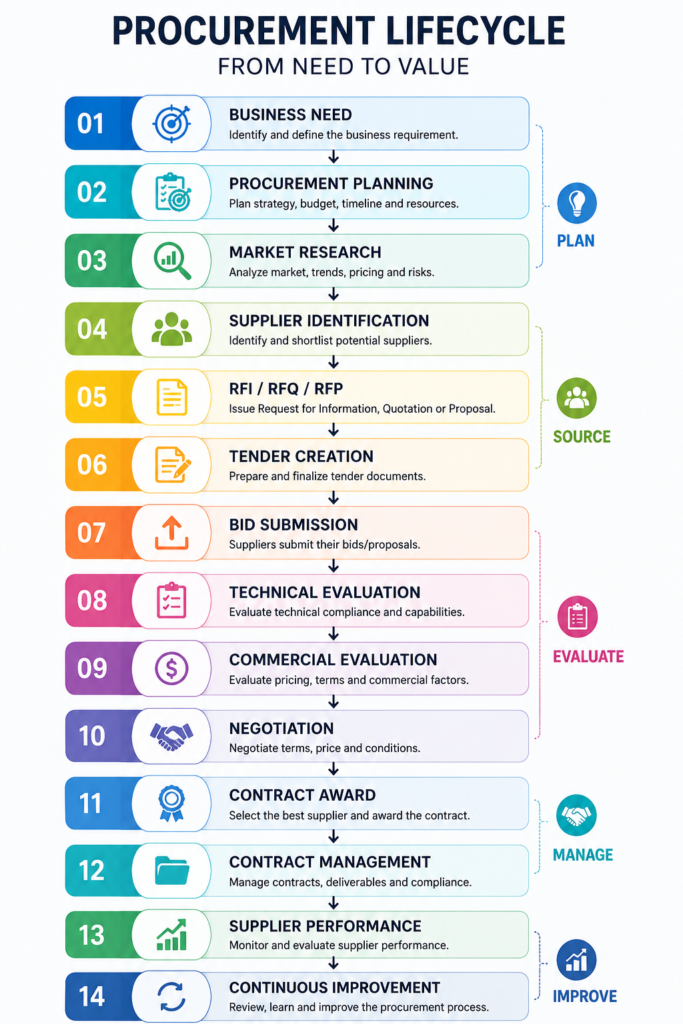
Each stage presents opportunities to improve efficiency, reduce risk, and enhance decision-making through better processes and technology.
AI Across the Procurement Lifecycle
Artificial Intelligence can support procurement teams throughout the entire lifecycle.
1. Procurement Planning

AI can assist with:
- Demand forecasting
- Budget analysis
- Spend prediction
- Historical purchasing analysis
- Procurement planning recommendations
- Inventory optimization
Business Benefits
- Improved budgeting
- Better resource allocation
- Reduced emergency purchasing
- Increased planning accuracy
2. Market Intelligence & Supplier Discovery
Organizations often spend significant time identifying and evaluating suppliers.
AI-supported tools can help procurement teams:
- Discover qualified suppliers
- Compare supplier capabilities
- Monitor supplier performance
- Identify market trends
- Analyze supplier risk indicators
- Support supplier segmentation
فوائد
- Faster supplier discovery
- Improved supplier quality
- Broader market visibility
- More informed sourcing decisions
3. Tender Preparation
Preparing tenders involves defining requirements, evaluation criteria, timelines, and documentation.
AI can help by:
- Structuring tender documents
- Reviewing consistency
- Identifying missing requirements
- Supporting document quality checks
- Organizing procurement information
This allows procurement teams to spend more time on strategic planning and stakeholder engagement.
Tender Planning Framework
A well-designed tender process generally includes:
Define Business Requirements
- Scope of work
- Technical specifications
- Budget considerations
- Delivery timelines
- Procurement objectives
Market Research
- Supplier landscape
- Industry benchmarks
- Pricing trends
- Risk assessment
- Innovation opportunities
Tender Documentation
- Request for Proposal (RFP)
- Request for Quotation (RFQ)
- Invitation to Tender (ITT)
- Evaluation criteria
- Commercial terms
Governance
- Approval workflows
- Procurement policies
- Regulatory compliance
- Ethical standards
- Documentation controls
Strong governance helps ensure fairness, transparency, and accountability throughout the procurement process.
Supplier Evaluation Framework
Selecting suppliers should involve both quantitative and qualitative assessment.
Suggested Evaluation Criteria
| Evaluation Area | Typical Focus |
|---|---|
| Technical Capability | Expertise and resources |
| Commercial Proposal | Pricing and value |
| Financial Stability | Business continuity |
| Quality Assurance | Standards and certifications |
| Delivery Capacity | Timelines and logistics |
| Innovation | Value-added solutions |
| Sustainability | ESG considerations |
| Risk Profile | Operational and compliance risks |
A structured evaluation framework supports more consistent and objective procurement decisions.
Procurement Governance
Effective procurement governance is essential for maintaining compliance, reducing risk, and supporting organizational objectives.
Key governance principles include:
- Clearly defined approval processes
- Segregation of duties
- Documented procurement policies
- Transparent evaluation methods
- Supplier due diligence
- Audit trails
- Performance monitoring
- Continuous process improvement
Practical Procurement KPIs
Executive teams should monitor procurement performance using measurable indicators.
| KPI | Purpose |
|---|---|
| Procurement Cycle Time | Measure process efficiency |
| Cost Savings | Evaluate financial impact |
| Supplier Performance | Monitor delivery and quality |
| Contract Compliance | Ensure policy adherence |
| Spend Under Management | Assess procurement coverage |
| Supplier Risk Score | Track supplier resilience |
| Procurement ROI | Measure business value |
| Tender Completion Time | Improve responsiveness |
Tracking these metrics helps organizations identify opportunities for optimization and demonstrate procurement’s strategic contribution.
Industry Example: Infrastructure Procurement

Imagine a large infrastructure project involving multiple suppliers, strict timelines, and regulatory requirements.
A structured procurement approach can support:
- Clear tender documentation
- Consistent supplier evaluation
- Transparent award decisions
- Effective contract management
- Ongoing supplier performance reviews
Technology can further enhance these processes by improving access to data, automating repetitive tasks, and supporting better decision-making.
Section Summary
At this stage, we’ve explored:
- The evolution of procurement
- Challenges of traditional procurement
- The procurement lifecycle
- Opportunities for AI support
- Tender planning principles
- Supplier evaluation frameworks
- Procurement governance
- Executive KPIs
These concepts provide the foundation for modern procurement transformation.