


Global Standards in Oil and Gas Marine Terminal Operations and Safety
Overview
This immersive five-day KELeaders programme equips participants with the knowledge, skills, and confidence to manage, operate, and ensure safety in oil & gas marine terminals in line with **international standards and best practices**.
From cargo properties to ship/shore operations, risk assessment, and terminal management, this course blends theory with practical applications, enabling professionals to excel in a safety-critical, regulation-driven environment.
Key Learning Objectives
By the end of this programme, participants will be able to:
Master the operational and management principles of oil & gas marine terminals.
Interpret and apply international regulations and industry requirements.
Plan and execute storage and transfer operations effectively.
Oversee vessel operations including crude/product tankers and LNG/LPG carriers.
Lead terminal support operations — berthing, cargo transfer, emergency response, and vessel departure.
Implement safe operating practices and oil spill contingency procedures.
Conduct qualitative and quantitative risk assessments for terminal operations.
Programme Outline
1. Cargo Properties
* Dangerous cargo classification
* Toxicity, confined spaces, breathable atmospheres
* Hydrocarbon properties: crude oil, LPG, LNG
* Fires & explosions: UEL, LEL, BLEVE, pancake cloud explosions
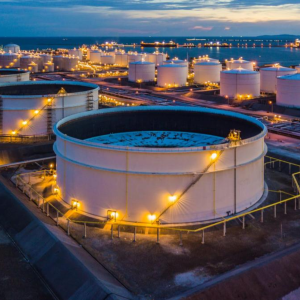
2. Storage Tanks
* Atmospheric aboveground storage tanks
* Floating roof, fixed roof, variable vapour space & pressurised tanks
* Tank inspections & cleaning procedures
3. Transfer Systems
* Centrifugal pumps: design & operation
* Piping systems, flow & pressure matching
* Marine loading arms, lightering
* Ship/Shore Safety Checklist
4. Harbour & Vessels
* Jetties, quays, wharves & SBMs
* Harbour design, tidal effects, depth constraints & dredging
* SBM design, hoses compatibility, marking & testing
* Shipboard management, disposal of washings, slops & dirty ballast
* Bunkering operations, communications & emergency response
5. Safety and Risk
* Ignition sources, electrostatic charge
* Hazardous zone classification, intrinsically safe equipment
* Fire detection & protection systems
* Risk assessments & risk management
* Qualitative & quantitative risk assessment methods
6. Terminal Management
* Storage & transfer planning
* Berthing & cargo transfer support
* Emergency response leadership
* Vessel departure support
* Security and vessel access
* International regulations & compliance requirements
Why KELeaders?
* **Internationally benchmarked content** aligned with IMO, OCIMF, and ISGOTT guidelines.
* **Real-world case studies** from leading oil & gas terminals.
* **Interactive learning** with simulations, role-plays, and scenario analysis.
Who Should Attend
* Marine terminal managers & supervisors
* Port authority officials
* Oil & gas operations engineers
* HSE managers & safety officers
* Vessel operations and logistics coordinators
Enquiries & Registration
Enquiry at : admin@keleaders.com
Whatsapp: 0044 790 125 9494
For more details visit our website : www.keleaders.com